Footprint
A secure mobile platform for families to preserve and share children's memories, without the privacy risks of social media. Built from strategy through launch on iOS and Android.
The Problem
By 2030, two-thirds of identity fraud cases are predicted to result from “sharenting”: parents oversharing their children’s personal information on social media. It’s a growing concern with real consequences: privacy violations, data misuse, and digital footprints kids never consented to.
Footprint’s founder Nate Fish saw the gap. Families needed a secure digital space to store and share memories (photos, videos, milestones, important documents) without exposing children to the risks of public social media platforms.
The goal was clear: launch an MVP fast, with clean architecture that could scale, and code quality that wouldn’t need to be thrown away after launch.
Setting the Course
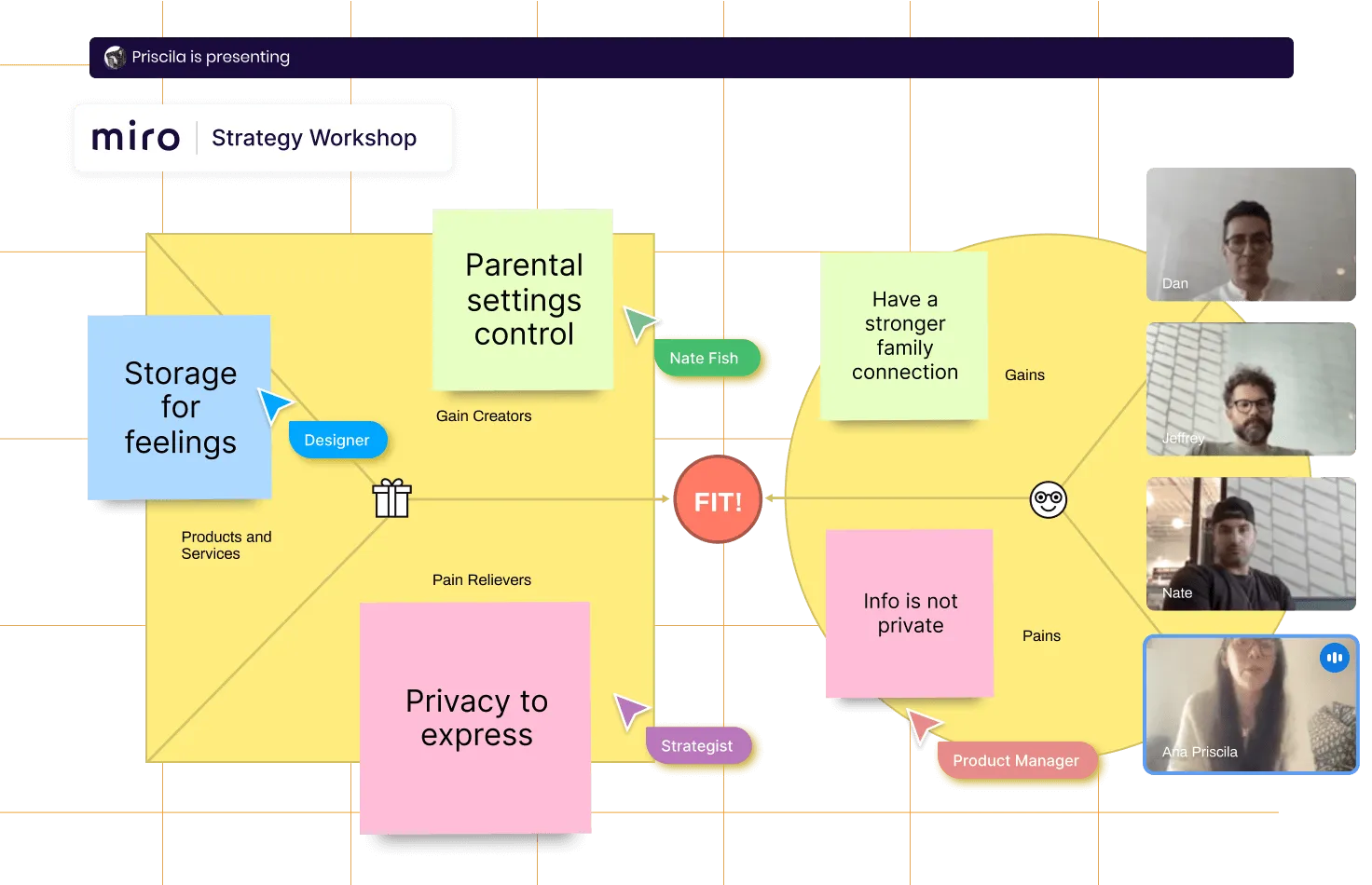
We started with in-depth interviews, both with the founder and potential users, to understand the behaviors and anxieties driving the need for a product like this. Parents weren’t looking for another social network. They wanted a private, controlled environment where family memories belonged to the family.
Market analysis confirmed the positioning: the intersection of family tech and privacy was underserved. Competitors either treated it as a social feature or bolted privacy on as an afterthought. Footprint would lead with security and ownership from day one.
We ran wireframes and prototypes through user testing before writing a single line of code. The product roadmap was scoped to validate the core value proposition (secure sharing within a trusted circle) without overbuilding.
What We Built
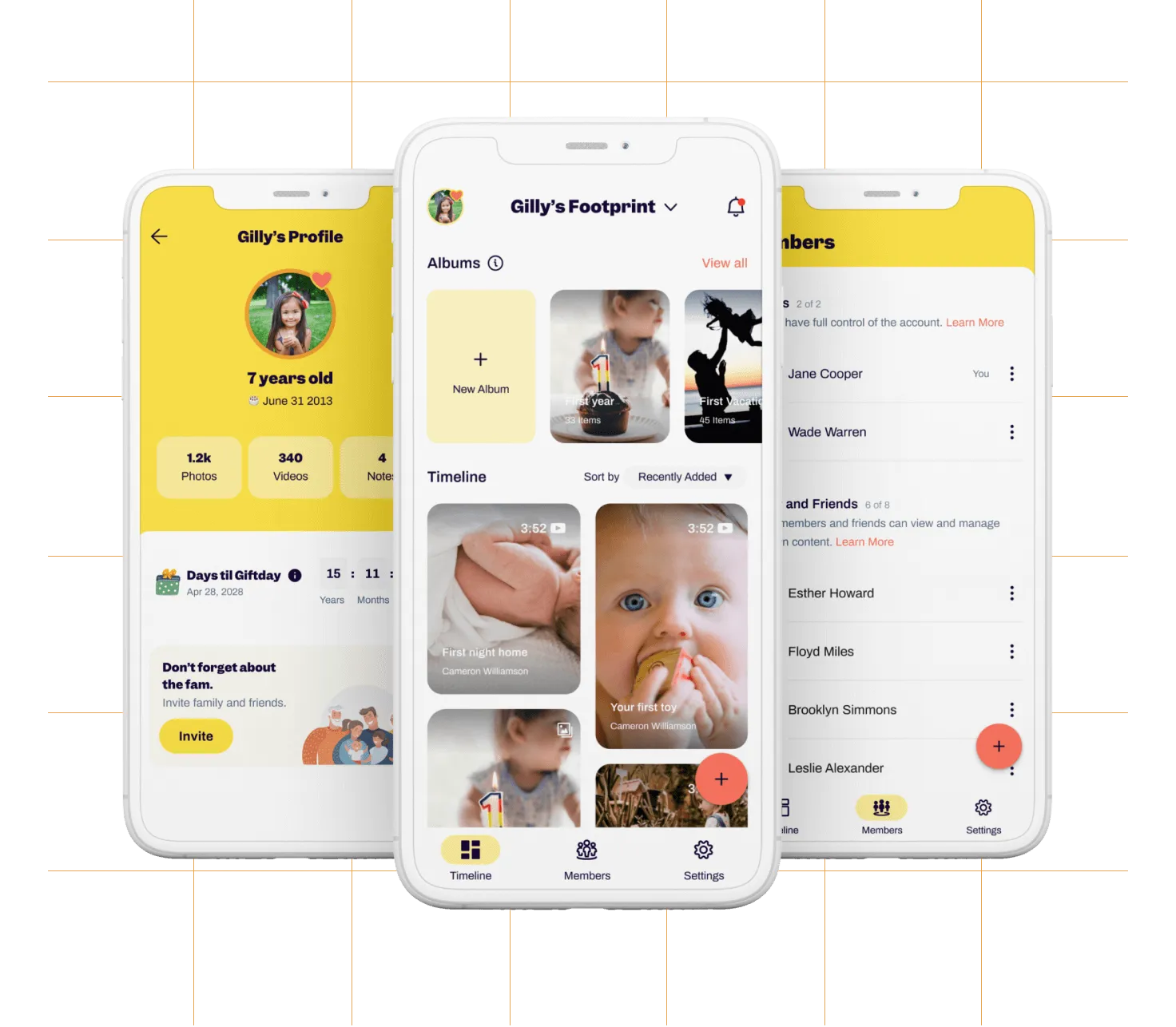
Secure Memory Sharing. A private platform where families store photos, videos, messages, and important documents. Every piece of content is controlled by the account owner, not an algorithm.
Collaborative Family Circle. Family members and trusted friends can contribute content to a child’s timeline. Grandparents, aunts, uncles: everyone participates without needing to be on social media.
Ownership Transfer. A differentiating feature: when children reach an appropriate age, they assume ownership of their account and all the memories stored within it. The digital footprint becomes theirs.
Parental Controls. Complete control over who sees what, who can contribute, and how content is shared. No public profiles, no discoverability, no data harvested for advertising.
The tech stack (Flutter, Firebase, RevenueCat, MixPanel) was chosen for speed to market on both iOS and Android from a single codebase, with analytics and monetization built in from the start.

Iterative Refinement
After launch, we implemented event tracking and analytics to understand how families actually used the product. Engagement data drove feature prioritization, not assumptions.
Regular feedback sessions with the founder kept the product aligned with the business vision while responding to real user behavior. The MVP wasn’t a throwaway prototype. It was a production foundation we refined incrementally.
Branding and Identity
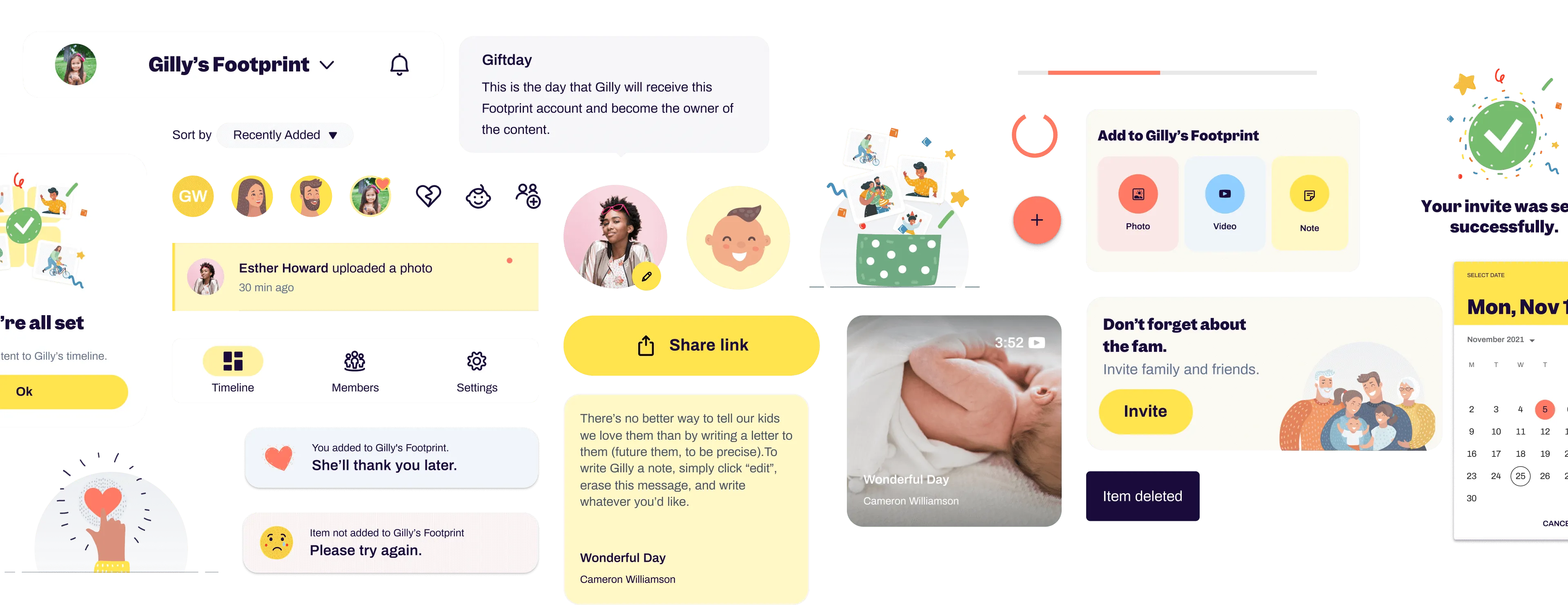
The product needed a visual identity as intentional as its privacy architecture. We developed the complete brand (logo, color palette, typography, and design language) to communicate trust, warmth, and security.
Every user-facing surface carried a cohesive visual identity that reinforced the product’s core promise: this is a safe place for your family’s memories.
The Outcome
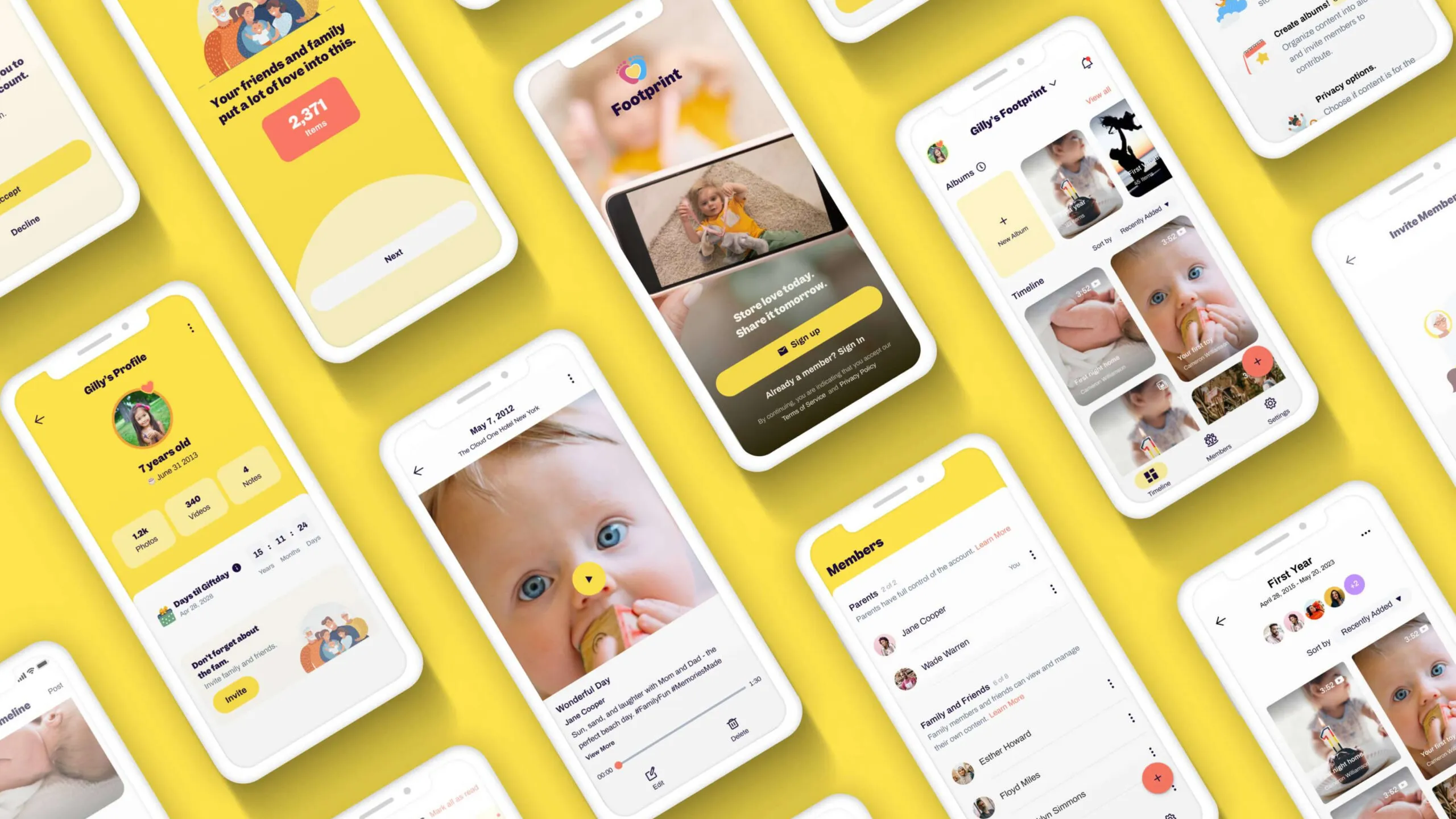
Footprint launched on both the Apple App Store and Google Play with a 5-star rating. The product validated the thesis that parents will pay for a private alternative to social media when the experience is thoughtfully designed.
From strategy through branding and launch, the engagement covered every phase of product development. Fish didn’t need to coordinate between a strategy firm, a design agency, a development shop, and a branding studio. One partner, one roadmap, one delivery cadence, and a product that shipped on time with the quality to back it up.